
After handling over 170,000 alarms and 2,639 confirmed break-ins together, Noonlight and TrueLook have learned a great deal about the state of construction-site security. Together, we’ve identified key findings from monitoring over [insert number] sites to highlight emerging trends and share what we’ve learned about the state of construction site monitoring.
Construction Site Theft Is Getting Worse
Construction site break-ins are on the rise, increasing over 50% year over year from 2024 to 2025. Thieves primarily target high-value items like copper wire, lumber, and roofing materials; temporary power equipment such as generators, tools, and other small equipment; and other materials that are often left loose and accessible at the end of the day.
Many break-ins aren’t smash-and-grabs or crimes of convenience like we often see in retail. We observed a rising trend of thieves breaking in by simply driving into an unlocked or unguarded jobsite, loading up, and leaving—all in less than 20 minutes. Without a video monitoring solution in place, this entire crime can go undiscovered for an entire weekend before the crew returns to the jobsite.
This points to a major issue with unattended or temporary sites without a deterrence-focused security plan in place: vulnerabilities are exploited, and the costs add up to more than just replacing a stolen tool. Theft requires navigating tricky insurance paperwork and necessitates replacement tools or labor, causing delays and headaches for all parties involved.
When Are Construction Sites Most Vulnerable?
Our research found that construction sites are most vulnerable after hours and on weekends. Confirmed break-ins peaked between 11 p.m. and 3 a.m., with over 40% occurring on Saturdays and Sundays. Both peaks reveal that sites are targeted when they’re empty, fewer people are available to respond to alarm notifications, and nearby foot traffic has died down.
Over time, we found seasonal spikes occurring in April, as the weather gets warmer and evenings get longer, and from July through December, which TrueLook attributes to peak construction season. This means more opportunity thanks to an increase in active sites and unguarded materials.
These findings reflect exactly why after-hours monitoring matters for construction security solutions. A security plan that doesn’t cover the middle of the night or weekends leaves a glaring window of opportunity for thieves—and the consequences extend well beyond the cost of replacing stolen equipment. A single stolen machine can result in an estimated 400–800 hours of lost production, compounding the financial impact with costly project delays.
%20(1).png)
170,000 Alarms Tell a Bigger Story About Construction Security
An effective security solution isn’t just about detecting more events—it’s about effectively determining which events require action. After handling over 170,000 alarms on TrueLook sites but only dispatching emergency services 2,000 times, we learned that an alarm doesn’t always equal a threat and that not every event should be treated equally.
The fact that almost 30% of these alarms were caused by normal employee activity demonstrates the need for verification on construction sites. Without verification, routine activity can lead to unnecessary emergency dispatches, wasting emergency resources and potentially resulting in hefty false alarm fees for the jobsite.
Why Video Verification Matters
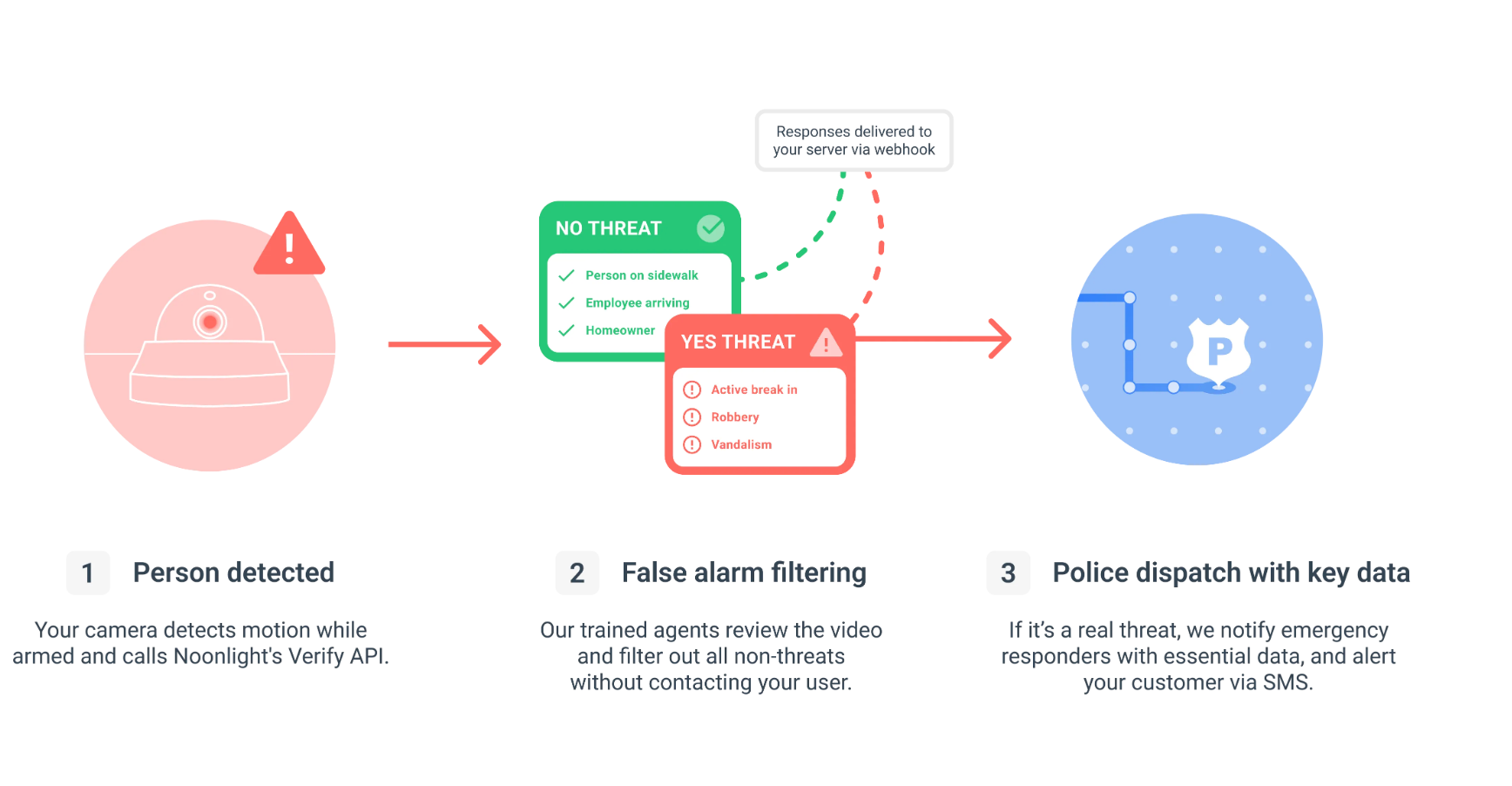
Video alarm verification can help prevent unnecessary dispatches, conserving emergency resources and preventing your customers from being hit with costly false alarm fees. With video verification solutions like Noonlight’s Verify API, monitoring agents can filter out routine activity, identify credible threats, give emergency responders better context, power faster response, and turn security cameras from passive recording devices into active protection and response systems.
The general workflow for alarm video monitoring begins with detection and human verification, moves to deterrence or escalation—whichever the situation at hand calls for—and results in either dismissing the event as a false alarm or contacting emergency services as needed.
What Construction Companies Can Do to Reduce Theft
Though this all may sound like you need an armored guard to stand sentry outside your construction site, there are a few more practical solutions you can implement immediately to reduce theft and secure your jobsite.
1. Secure gates after every shift: The most common enabler of construction site theft is unlocked gates, meaning that a gate left open at the end of the day is practically an invitation for criminals who have been scouting your site. Ensure you’re not making yourself an easy target by making gate checks at the close of each day a well-documented, signed step in your close-out procedure.
2. Protect high-value items: We found that thieves target unsecured, high-value materials like copper wire, conduit, lumber, and machinery or tools staged near active work areas. Protect these items by using reinforced locks, staging materials strategically in well-lit areas, removing and securing equipment keys, and ensuring expensive tools aren’t left directly accessible to a backed-up truck.
3. Combine deterrence techniques: Sites that fare the best utilize a combination of physical controls—like gates, locks, and lighting—along with deterrence-focused security measures including cameras, strobes, sirens, talkdown, and video monitoring.
4. Control after-hours employee access: Our monitoring data found many instances of after-hours activity by credentialed workers that rarely gets reported as theft in post-incident reviews. Keeping the list of keyholders short and well documented, along with having a monitoring solution that flags all unexpected activity regardless of who’s involved, provides much-needed visibility and creates a culture of accountability.
What This Means for Construction Security Providers
This doesn’t mean construction customers need more cameras. They need a verified response layer that makes those cameras actionable.Adding professional monitoring to your security product with a partner like Noonlight means 24/7 coverage of human-verified events, fewer nuisance alerts, and a new stream of recurring revenue.
Frequently Asked Questions
How common is theft on construction sites?
Construction site theft is becoming increasingly common. TrueLook and Noonlight monitored 2,639 confirmed break-ins in 2025, up from fewer than 1,750 in 2024—a 50% year-over-year increase. The rate of incidents per monitored site also increased, suggesting the rise wasn't simply caused by monitoring more construction sites.
When do most construction site thefts happen?
Construction sites are most vulnerable after hours and on weekends. More than 40% of confirmed break-ins occurred on Saturdays and Sundays, and the majority took place between 11 p.m. and 3 a.m. Seasonal spikes were also observed in April and from July through December.
What are the most commonly stolen items from construction sites?
Construction thieves commonly target valuable materials and equipment that can be quickly removed from a site. These include copper wire and conduit, lumber and roofing materials, generators and temporary power equipment, tools, heavy equipment, and materials left in storage containers or laydown areas.
How can you prevent theft on a construction site?
Construction companies can reduce theft by using multiple layers of security rather than relying on a single deterrent. This includes securing gates at the end of every shift, protecting high-value materials, removing equipment keys, improving lighting, controlling after-hours access, strategically placing security cameras, and using professional video monitoring to verify and respond to suspicious activity.
How does professional video monitoring reduce false alarms?
Professional video monitoring adds human verification between an alarm and the response. Of the 170,000+ alarms monitored in the TrueLook and Noonlight dataset, 29% were caused by routine employee activity, while authorities were called roughly 2,000 times overall. By reviewing video before escalation, monitoring agents can distinguish everyday activity from events that may require emergency response.
How can my company add video monitoring to my construction security camera?
Security providers can add professional video monitoring to existing construction security cameras by integrating with a monitoring partner like Noonlight. Through Noonlight’s Verify API, camera and security platforms can send video events and relevant context to trained monitoring agents for review. Agents can verify potential threats, take appropriate action, and coordinate emergency response when needed, allowing companies to offer 24/7 video monitoring without building and staffing their own monitoring center.
.svg)