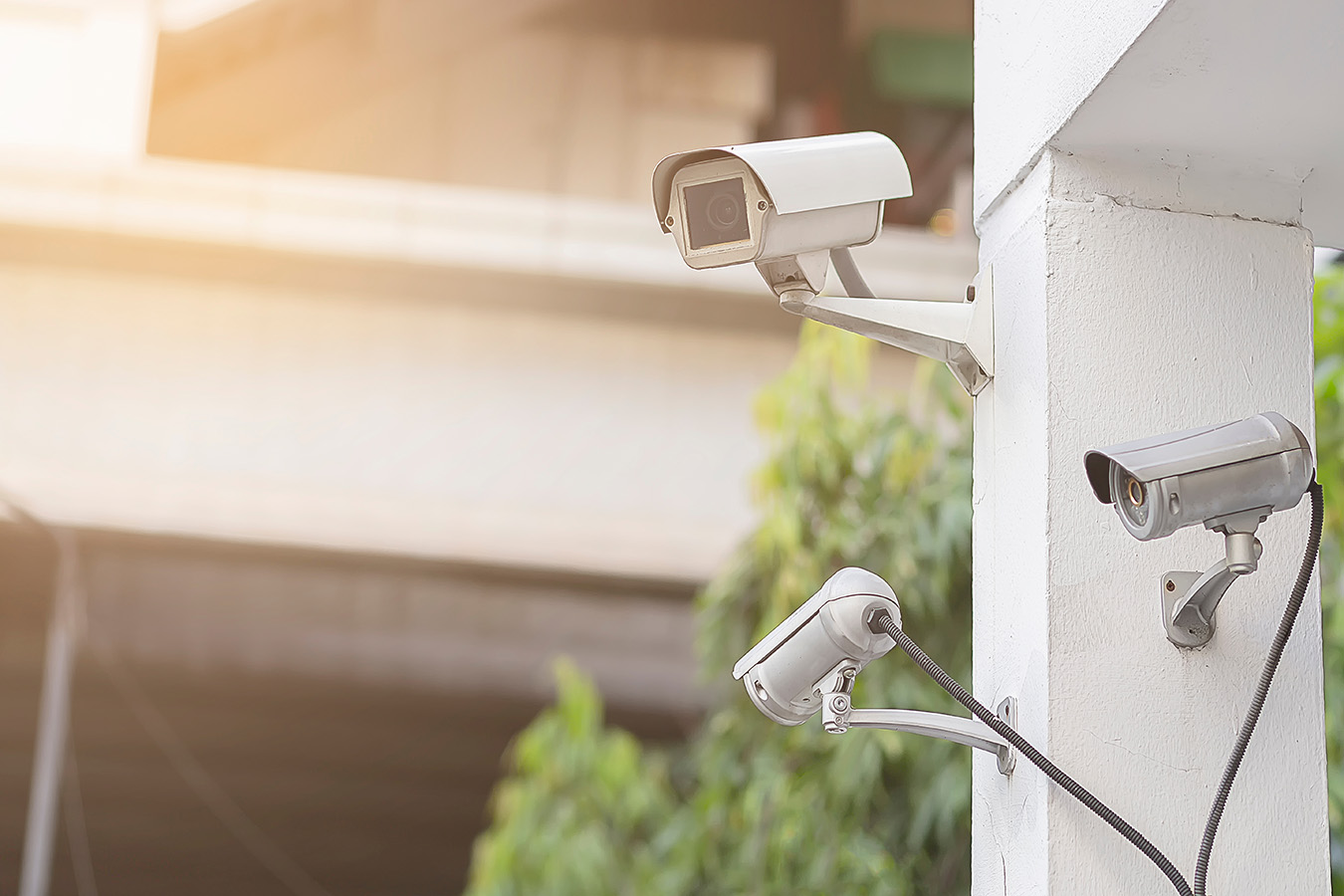

In late March, the Noonlight team joined thousands of other security industry professionals at the International Security Conference and Exposition (ISC West, for short) in Las Vegas to see the latest disruptions and innovations in our space.
Along with dancing robots, we saw rapid advancements not only in technology for detecting threats, but also an overall shift in how threats are being handled from the first notification. After fully embracing AI and other automation possibilities, the next frontier for safety is moving toward proactive vs reactive response—closing the gap between what happens when a threat is first seen to when it’s responded to.
Here are our team’s biggest findings from ISC West 2026, and what they indicate about the future of the security industry.
1. Security Isn’t Fixed. It’s Mobile, Scalable, and Everywhere
Gone are the days of security being an immobile, fixed system tied to permanent infrastructure. Thanks to developments like mobile or trailer-based surveillance units and multi-cam, solar-powered systems, dynamic and temporary environments (like construction sites and pop-up events) can adopt a security system that works for and with them.
With this flexibility comes an increased demand for consistent, reliable response, regardless of where the system is set up or how an alarm is deployed.
2. AI Is Winning on Detection, But Humans Own the Outcome
AI is still everywhere, but it’s no longer an innovation, it’s become an expected part of safety workflows, particularly for transforming how incidents are identified. With richer context and customization capabilities, detection is easier than ever. When paired with the rise of AI agents tasked with handling filtering, tagging, and initial workflows, this frees up human agents to make decisions and escalate action in moments that require human judgement.
AI can do a lot, but it can’t replace a human in the loop during critical moments.
3. Prevention and Deterrence Is the New Priority
Just like at CES 2026, the most top-of-mind priority for our industry (now that automation is well on its way to becoming industry standard) is not only getting smarter and faster at identifying threats, but stopping them before they escalate.
Across the show floor and in our conversations, we repeatedly saw a strong emphasis on deterrence and prevention-first messaging. Automated, early-stage threat responses are becoming more common, along with a continued focus on real-time intervention techniques like AI-powered talkdown.
The takeaway was clear: early deterrence engagement and prevention is no longer a nice-to-have, it’s critical, as is acknowledging that this doesn’t eliminate threats altogether. A successful system should focus on deterrence, prevention, and escalation.
4. The Rise of Identity-Driven Security Provides More Data and Better Context
As devices continue to evolve and get smarter, context is shifting. Thanks to the rapid growth in identity verification—like biometrics and mobile credentials—the next evolution looks like not only detecting activity, but understanding intent. Instead of systems just reading “what is happening,” they’re increasingly able to understand “who is present,” leading to richer context and signals.
This, in turn, enables more confident, accurate decisions and fewer false alarms.
5. The Biggest Gap Isn’t Detection — It’s Response
Despite advancements across platforms and tools, security workflows are still often fragmented, spread across multiple systems, teams, and processes. Unfortunately, that fragmentation becomes most visible at critical moments when an incident actually needs a response plan.
Because of this, what happens after an alarm remains inconsistent. Some of the pain points felt as a result of this include:
- End users ultimately remaining responsible for reviewing and acting on alerts
- Limited direct pathways to emergency response
- Alerts being rerouted internally without clear escalation paths
- Monitoring and dispatch not being prioritized as a core product by many vendors
This indicates the industry has optimized for awareness, not resolution.
6. Turning Alerts Into Outcomes Is the Next Frontier
The future of security will be defined by action, not just insights. Real-world outcomes will define the next generation of security and surveillance platforms, and success will be afforded to those that unlock the bridge between detection, decision, and action.
This presents an opportunity for businesses that already have innovations like this on their roadmap. Instead of being leapfrogged by new technologies, they can use the time before these initiatives become table stakes to better understand, quantify, and communicate the ROI and business value of this to their customers.
What’s Next?
ISC West made one thing clear: our industry is in an exciting growth phase. Success in the next few years will belong to the systems that adopt AI to improve speed and scale, while combining intelligent detection with reliable, real-world action.
The future of security isn’t just about visibility—it’s about delivering real-world outcomes. That’s exactly where Noonlight is focused.
.svg)